

RF & Microwave Components for Research & Academia
Custom Components for Particle Physics, Quantum, Radio Astronomy, and Advanced Research
MCLI’s RF & Microwave Components for Research & Academia support particle accelerators, radio astronomy receivers, quantum computing testbeds, plasma and fusion research, spectroscopy, and the general-purpose RF benches that university and national laboratories run every day.
For more than 40 years, MCLI has designed and manufactured passive and active RF and microwave components in the USA. Universities, national laboratories, and research institutions rely on our custom RF components for research, single-piece and low-volume production, and repeatable quality.
Why Research and Academic Institutions Choose MCLI
Research programs need more than catalog parts. Programs need RF components for national laboratories and university labs alike: custom builds, fast quotes, and repeatable performance that off-the-shelf suppliers are not set up to support. MCLI has designed and built custom passive and active components for research programs for over 40 years, with in-house production and testing that holds a prototype and a production reorder to the same specification.
Custom Components in Single-Piece and Low-Volume Quantities
Research rarely needs a thousand of anything. It needs one, or ten, built to a specification no catalog covers. MCLI designs and manufactures custom components by the hundreds each year and takes on low-volume custom RF prototypes and single-piece orders that high-minimum suppliers turn away.
Fast Quotes That Fit Grant and Budget Cycles
Research schedules run on beam time, grant windows, and publication deadlines. MCLI returns quotes on standard catalog items within 24 hours and works with laboratories on quotes that hold long enough to move through sponsored-program review.
Broad Frequency Coverage from DC to 70 GHz
MCLI designs passive and active components from DC to 70 GHz, spanning L, S, C, X, Ku, K, and Ka bands and into the millimeter-wave range, using stripline, microstrip, and lumped element construction selected for each design.
Repeatable, Documented Performance for Reproducible Research
Published results depend on hardware that behaves the same way twice. MCLI manufactures under documented process control and can re-supply the same component years later, so a program holds its RF performance across graduate-student turnover and multi-year funding.
US Design and Manufacturing with Direct Engineering Support
Every MCLI component is designed, built, and tested in-house at our 50,000 sq. ft. USA facility. Principal investigators, graduate students, and lab engineers work directly with our engineering team from specification through delivery.
The Challenge: RF and Microwave Design for Advanced Research
Research pushes RF and microwave hardware into regimes catalog parts were never built for: unusual frequencies, one-off geometries, high power, and tight tolerances, often in quantities of one. These are the constraints MCLI designs around for university and national laboratory programs.
Custom Specifications Outside the Catalog
Experiments define their own requirements: non-standard frequency splits, specific coupling and attenuation values, particular connector interfaces, and packages sized to the apparatus. Catalog parts rarely match, and a close-but-not-exact substitute can compromise the measurement.
Small Quantities and One-Off Prototypes
A research build often needs a single component or a short run. Suppliers built around high-volume production and minimum order quantities decline this work or quote long lead times, leaving labs without a source.
Deadlines Set by Beam Time, Grants, and Publications
Research runs against fixed windows: scheduled beam time, fiscal-year boundaries, grant end dates, and conference deadlines. A long lead time on one component can stall an entire experiment.
Wide Frequency and Power Ranges
Research spans MHz-range accelerator and fusion-heating lines through millimeter-wave receivers, and power levels from the microwatts of a qubit readout to the kilowatts of a high-power load. Few suppliers cover that breadth with custom design.
Reproducibility Across a Multi-Year Program
Long-running programs need components that stay consistent across reorders and across years, so results hold as students, postdocs, and staff turn over. Parts that drift lot-to-lot undermine reproducibility.
The Solution: How MCLI Delivers RF & Microwave Components for Research & Academia
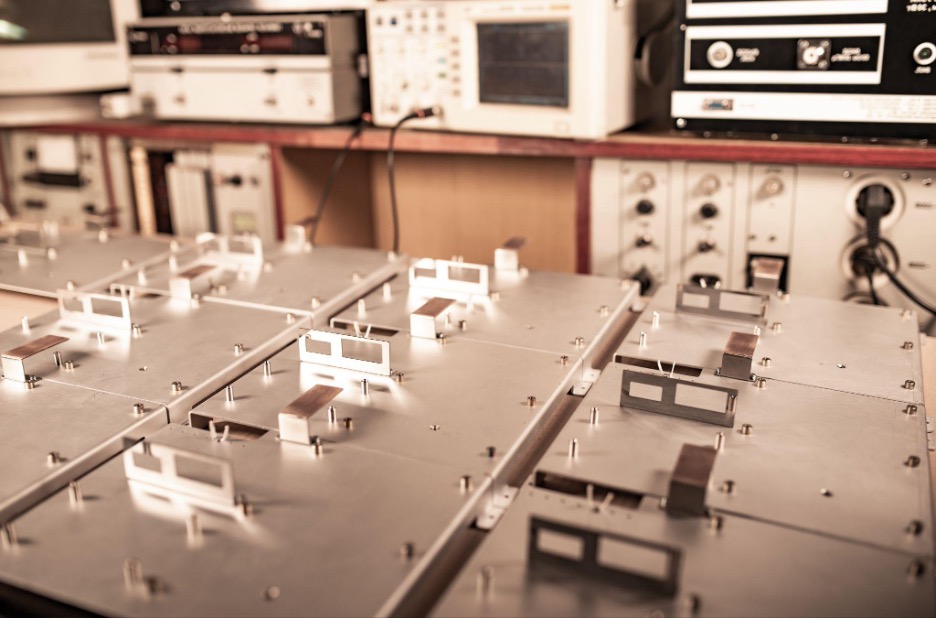
For more than 40 years, MCLI has designed, manufactured, and tested RF and microwave components in-house in the USA for research and academic programs. Design, fabrication, and test under one roof give full control and traceability from specification through delivery. The result is a source of RF components for universities and national laboratories: custom passive and active dividers, couplers, hybrids, isolators, circulators, attenuators, switches, waveguide, detectors, and loads engineered to the requirements of the experiment.
Custom Design for One-Off and Experimental Requirements
MCLI engineers custom components to the exact electrical and mechanical requirements a research build defines, including non-standard frequency ranges, coupling and attenuation values, connector interfaces, and packaging. A close-but-not-exact catalog substitute never has to stand in for the part the measurement calls for.

Single-Piece Orders and Short Production Runs
MCLI takes on the quantities research actually orders, from a single prototype to a short production run, without the minimums that volume suppliers impose. The same engineering and test process applies whether the order is for one part or one hundred.

Lead Times Built Around Research Schedules
Beam time, grant windows, and conference deadlines do not move for a late component. MCLI runs design, fabrication, and test in one facility, removing vendor hand-off delays so a single part does not stall the experiment.
Frequency Coverage and Power Handling Matched to the Experiment
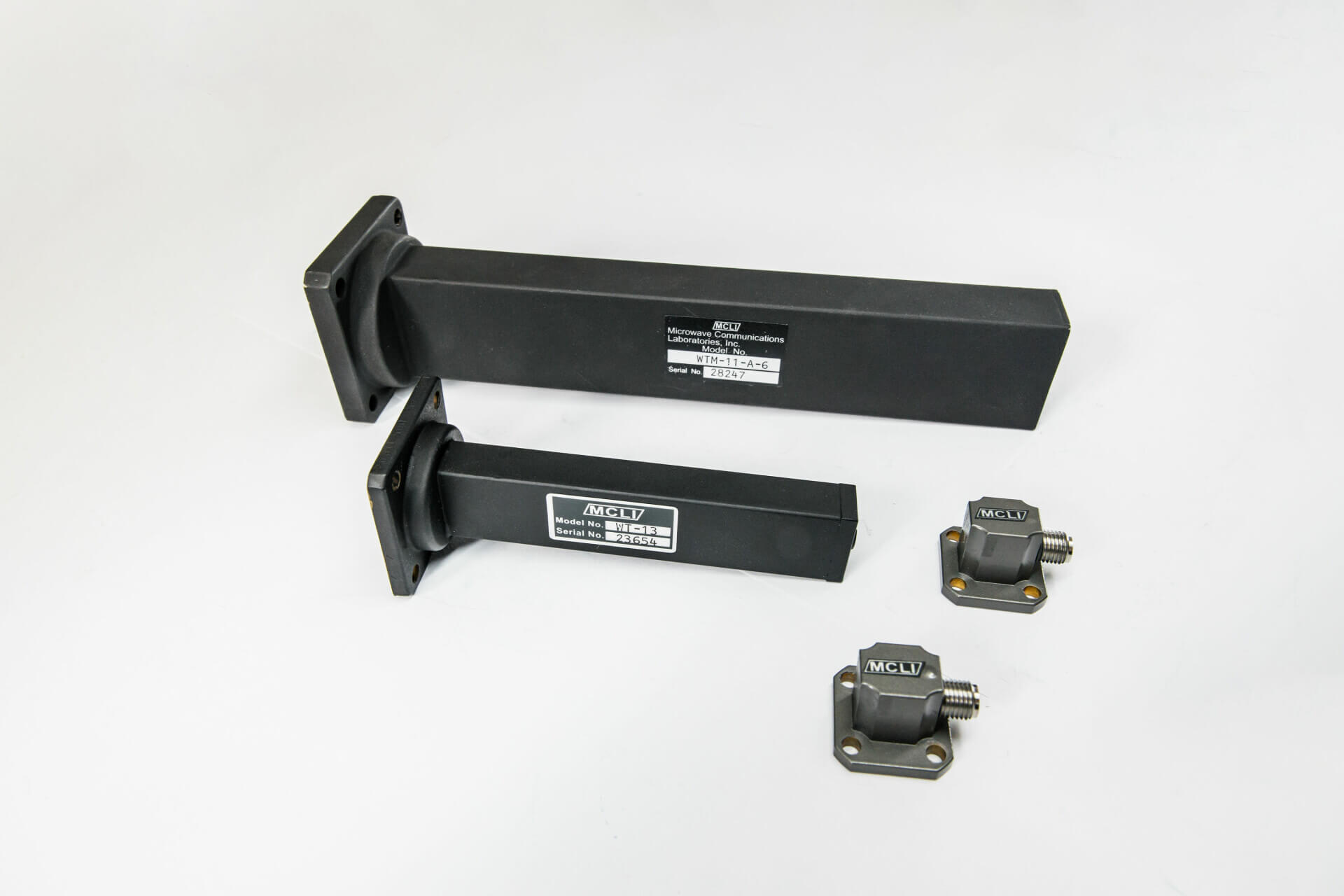
MCLI covers DC to 70 GHz using stripline, microstrip, and lumped element construction, choosing the method that delivers the frequency selectivity and size each design needs. From high-power loads and terminations for accelerator and fusion research to isolators and circulators that protect sources from reflected power, the same facility builds for microwatts and kilowatts alike.

Documented, Repeatable Components for Reproducible Results
MCLI verifies components on vector network analyzers, measuring S-parameters (insertion loss, return loss, VSWR, and isolation) across the full operating band, and manufactures under ISO 9001:2015 for consistent, reorderable parts. A program can order the same component years later and hold its RF performance across staff and funding cycles.
Result: Custom components engineered to the experiment, delivered on research schedules, and reorderable years later.
What Research and Academic Applications Does MCLI Serve With RF and Microwave Components?
MCLI supplies custom passive and active RF and microwave components across the research fields that depend on precise signal control, power handling, and switching. Each area below pairs the application with the MCLI components it draws on.
Particle Accelerators and Beam Instrumentation
Accelerator RF systems drive cavities through low-level RF (LLRF) control and protect klystrons and solid-state amplifiers from reflected power. MCLI supplies RF components for particle accelerators, including the couplers, circulators, phase control, and loads these drive and distribution chains rely on.
Radio Astronomy and Receiver Front Ends
Radio telescope receivers depend on low-loss feed networks, noise-calibration couplers, and isolation ahead of sensitive low-noise amplifiers. MCLI builds RF components for radio astronomy front ends, including the couplers, hybrids, and isolators these receivers use.
Quantum Computing Research
Quantum control and readout chains route, attenuate, and isolate signals across the 4 to 8 GHz qubit band and beyond. MCLI supplies microwave components for quantum computing signal chains, including the attenuators, directional couplers, isolators, and circulators used throughout.
See Our Variable and Fixed Attenuators
See Our Isolators and Circulators
See Our Directional Couplers
Fusion, Plasma, and High-Power RF Research
Ion and electron cyclotron heating deliver high RF and microwave power to plasma through transmission lines, waveguide, and loads. MCLI builds waveguide components, high-power terminations, and isolators for these systems.
Spectroscopy and Materials Research
NMR, EPR, and dielectric spectroscopy route microwave power through bridges built from circulators, couplers, attenuators, and detectors. MCLI supplies the control and detection components these instruments use.
See Our Isolators and Circulators
See Our Variable and Fixed Attenuators
See Our Zero-Bias Diode Detectors
mmWave, 5G/6G, and Antenna Research
Beamforming networks, channel sounders, and antenna ranges split, combine, switch, and level RF signals across wide bands. MCLI builds the dividers, hybrids, and switches these testbeds rely on.
See Our Power Dividers and Combiners
See Our 90° and 180° Hybrids
See Our Electromechanical Switches
Talk to an RF Engineer About Your Research Program
If you are sourcing RF and microwave components for a university, national laboratory, or research program, our engineering team can help with specification matching, custom design feasibility, prototype quantities, and lead time planning. We respond to quote requests within 24 hours for standard catalog items and work directly with research programs on custom component requirements.
RF & Microwave Components for Research & Academia: Related Products and Capabilities
MCLI manufactures custom microwave components for research institutions across accelerators, radio astronomy, quantum, fusion, spectroscopy, and antenna work. Production and testing are completed in-house at MCLI’s USA facility under ISO 9001:2015 quality controls.
RF and Microwave Engineering Capabilities for Research Programs
Custom RF and Microwave Component Design
MCLI develops custom components with application-specific frequency ranges, electrical specifications, connector configurations, and mechanical packages, in single-piece and low-volume quantities.
Learn More
Precision Frequency and Signal Control
MCLI engineers filters, attenuators, switches, and couplers for the frequency selectivity, isolation, and signal control research instruments require.
Learn More
Low-Loss Signal Management
MCLI builds components that hold low insertion loss and stable impedance through sensitive research signal chains.
Learn More
Power Handling and Signal Protection
MCLI manufactures high-power loads, terminations, isolators, and circulators that absorb unused energy and protect sources from reflected power.
Learn More
Integrated RF Assemblies and Engineering Support
MCLI combines filtering, switching, attenuation, and routing into custom assemblies developed with direct engineering support from specification through production.
Learn More
RF and Microwave Products for Research and Academic Applications
Bandpass Filters
Pass selected frequency ranges while rejecting unwanted signals in spectroscopy, receiver front ends, accelerator instrumentation, and laboratory test systems.
Learn More
Highpass Filters
Reject unwanted lower-frequency signals and support frequency conditioning in spectroscopy bridges, receiver chains, and other sensitive research instruments.
Learn More
Lowpass Filters
Suppress higher-frequency interference and harmonics while passing required lower-frequency signals through laboratory, instrumentation, and analytical systems.
Learn More
Cavity Filters
Provide high selectivity and low-loss performance for research and laboratory equipment requiring narrow bandwidths, strong rejection, and stable high-frequency operation.
Learn More
Directional Couplers
Sample forward and reflected RF power for monitoring, measurement, and system protection in accelerator, astronomy, and test platforms.
Learn More
Fixed Coaxial Attenuators
Provide stable, repeatable attenuation for benches and system calibration.
Learn More
Variable Attenuators
Provide adjustable signal-level control for calibration, equipment protection, dynamic-range management, and repeatable laboratory measurements.
Learn More
Isolators and Circulators
Control directional signal flow and protect sources and amplifiers from reflected energy in high-power and test systems.
Learn More
Electromechanical Switches
Route signals between paths in test systems, switch matrices, and measurement setups with low loss and high isolation.
Learn More
PIN Diode Switches
Provide rapid, high-isolation signal switching for time-sensitive measurement, routing, and control paths.
Learn More
RF Amplifiers
Increase signal strength across research signal chains and instrumentation.
Learn More
Waveguide Components
Support high-frequency, high-power transmission in fusion heating, millimeter-wave, and spectroscopy systems.
Learn More
Phase Shifters
Provide controlled phase adjustment for LLRF control, phased networks, and multichannel instruments.
Learn More
Bias Tees
Combine or separate RF and DC to bias active components and control lines.
Learn More
RF Loads and Terminations
Absorb unused RF energy with minimal reflection to protect equipment and maintain matched conditions.
Learn More
RF Connectors and Adapters
Connect interfaces across instruments, benches, and assemblies.
Learn More
Custom RF Assemblies
Integrate filtering, switching, attenuation, amplification, and routing into a single tested module.
Learn More
Frequently Asked Questions: RF & Microwave Components for Research & Academia
Does MCLI accept single-piece and prototype quantities?
Yes. MCLI designs and builds hundreds of custom components each year and welcomes single-piece and low-volume orders that high-minimum suppliers decline.
How fast can I get a quote, and will it hold for our grant cycle?
MCLI returns quotes on standard catalog items within 24 hours and works with laboratories on custom quotes that stay valid long enough to move through sponsored-program review.
What frequency range does MCLI cover?
MCLI designs passive and active components from DC to 70 GHz, spanning L, S, C, X, Ku, K, and Ka bands and into the millimeter-wave range.
Can MCLI build custom, non-standard specifications?
Yes. MCLI develops custom frequency ranges, coupling and attenuation values, connector interfaces, and mechanical packages engineered to the experiment.
Are MCLI components made in the USA?
Yes. All design, manufacturing, and testing is completed in-house at MCLI’s 50,000 sq. ft. USA facility.
Can MCLI provide test data with delivered components?
MCLI tests components against specification on RF and microwave equipment, including vector network analyzers for S-parameter measurement, and can provide measured data with delivery.
Can MCLI re-supply identical parts years later for reproducibility?
Yes. Manufacturing under ISO 9001:2015 process control lets MCLI re-supply the same component across a multi-year program for consistent, reproducible results.
Which research fields use MCLI components?
Particle accelerators, radio astronomy, quantum computing, fusion and plasma research, NMR and EPR spectroscopy, materials science, antenna and propagation research, and general RF test and measurement.
What construction methods does MCLI use?
Stripline, microstrip, and lumped element construction, selected to match the frequency, power, and size each design requires.
How do I start a custom design project with MCLI?
Contact MCLI’s engineering team with your electrical and mechanical requirements. The team helps with specification matching, design feasibility, prototyping, and lead time planning.
Advance Your Research with Precision RF
Partner with engineers who understand the custom, low-volume, and reproducibility requirements of university and national laboratory research.