

Getting signals to and from space is hard. Satellite communication systems deal with some of the toughest RF problems you’ll find anywhere.
Building ground terminals for LEO constellations or designing Ka-band transponders? The physics working against you stay the same. Signals get weaker, the atmosphere fights back, and every component in your chain either helps or hurts your link margin.
Let’s walk through what happens to your RF signal on its trip to orbit and back.
The Distance Problem
Orbital distances are significant.
Low Earth orbit satellites are typically a few hundred to around 2,000 kilometers above you. Geostationary satellites park at 36,000 kilometers. Your signal travels that distance twice. Up and down.
This creates free-space path loss. It is a fundamental propagation effect. As your signal spreads out from the transmitting antenna, it covers more and more area. Think of a flashlight beam. The farther you shine it, the dimmer it gets.
The math is unforgiving. A 20 GHz signal traveling to a GEO satellite faces around 210 dB of path loss. That is an enormous reduction in power. In free space, you are down by roughly 10²¹ before weather and hardware losses even show up.
That is under ideal conditions.
Rain Fade and Atmospheric Absorption
The atmosphere introduces additional loss mechanisms. Water molecules absorb RF energy, especially at higher frequencies. At Ka-band (26-40 GHz), heavy rain can add significant attenuation. In the wrong conditions, that can be well into double digits, and it can quickly eat up your link margin. A severe storm over a ground station can reduce margin enough to interrupt the link.
This is rain fade. Ka-band systems need extra link margin because of it. You can’t control the weather. You can only design around it.
Oxygen gets involved. At certain frequencies (around 60 GHz and 119 GHz), oxygen molecules resonate with your signal and absorb it. That’s why those bands don’t work for satellite links. Atmospheric absorption is high at those resonances.
Even on a clear day, you face atmospheric absorption:
- Water vapor in the air adds loss
- Clouds scatter some signal
- The ionosphere causes phase delays and depolarization at lower frequencies
All of this goes into your satellite link budget.
Understanding Satellite Link Budget Calculations
Here’s where everything comes together.
Your satellite link budget is an accounting sheet for power. You start with transmit power. Add in antenna gain. Subtract every loss between the transmitter and receiver. Path loss, atmospheric loss, cable losses, connector losses, everything.
What’s left at the end? That’s your received signal power.
The equation looks simple:
Received Power = Transmit Power + Gains – Losses
But getting a signal to the receiver isn’t enough. It has to beat the noise floor. Every receiver has thermal noise. Longer cable runs add loss, which reduces the signal level that reaches the receiver front end and effectively hurts system noise performance. Wider bandwidth lets in more noise.
That’s why engineers talk about C/N (carrier-to-noise ratio) or Eb/No (energy per bit to noise ratio). You need enough margin above the noise to decode your data reliably. NASA’s small satellite communications guide breaks down these link budget fundamentals for different satellite architectures.
Most satcom systems aim for at least 3 dB of link margin. That’s your safety buffer when conditions get worse than expected.
Why RF Amplifiers Matter in the Signal Chain
Every piece of hardware in your RF chain counts.
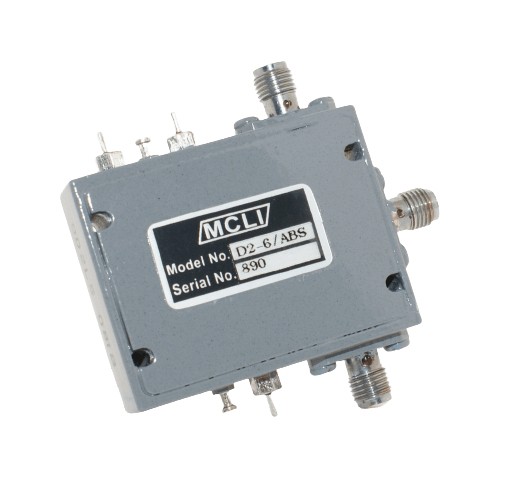
On the transmit side, you need RF amplifiers that can put out enough power to beat all those losses. High-power amplifiers aren’t perfect, though. They generate heat. They can distort your signal if you drive them too hard. And they cost money.
On the receiving side, you need low-noise amplifiers right at the front end. The first amplifier in your chain sets the noise figure for everything downstream. If your LNA adds too much noise, your link fails. You can’t fix it later.
Between transmitter and receiver, you have:
- Filters to reject interference
- Isolators to protect your amplifier from reflections
- Power dividers if you’re feeding multiple antennas
Every single component adds some insertion loss. Usually small, but it all adds up.
This is why RF amplifiers are critical in satellite systems. They’re the muscle that keeps your signal alive across hundreds or thousands of kilometers.
Frequency Band Tradeoffs
Different frequency bands create different problems.
- L-band and S-band (1-4 GHz) are forgiving. The signals propagate well through the weather. Antennas are bigger and easier to build. But bandwidth is limited, and these bands are getting crowded.
- C-band (4-8 GHz) is the workhorse of commercial satcom. It handles rain better than higher frequencies. But you still need decent-sized dishes.
- Ku-band (12-18 GHz) gives you more bandwidth. Antennas can be smaller. But rain fade starts becoming a real problem. You need to budget for it.
- Ka-band (26-40 GHz) is where new high-throughput satellites live. Tons of bandwidth. Small antennas. But signal attenuation from rain, clouds, and water vapor is serious. Your link budget gets tight fast.
The higher you go in frequency, the more bandwidth you get. But the more the atmosphere fights you. And your free-space path loss gets worse because it increases with the square of frequency.
Always a trade-off.
Noise Temperature and System Design
Here’s something that doesn’t get enough attention: noise.
Your receiver isn’t just picking up the signal. It picks up noise from everywhere. Thermal noise from components, noise from the sky, noise from the ground if your antenna points low.
That’s why satellite engineers care about G/T (gain-to-temperature ratio). It’s the receive antenna gain divided by the system noise temperature. Higher G/T means better receiver performance.
Every degree Kelvin of noise temperature hurts your link budget. Low-noise amplifiers and careful thermal design matter.
On a clear night pointing at cold sky, your antenna might see 10-20 K of noise temperature. Point it at the ground? You’re looking at 290 K. That’s a 10+ dB difference in noise power right there.
How Engineers Close the Link
So how do you close a satellite link?
You can make transmit power higher. That costs money and burns more energy. Solar panels and batteries are expensive in space.
You can make antennas bigger. More gain on both ends helps. But big antennas are heavy and expensive. On a satellite, every kilogram costs thousands of dollars to launch.
You can pick better components:
- Low-loss cables
- High-efficiency amplifiers
- Low-noise receivers
This is where component-level performance matters.
Or you can reduce your data rate. Less bandwidth means less noise. You can close the link with less power. But then you move data slower.
It’s a balancing act. You’re juggling transmit power, antenna size, component performance, frequency band choice, and link margin. Every project has constraints: budget, size, power, and weight. Your job is to find the combination that works.
Why Satellite Communication Systems Matter Right Now
Satellite communication systems are scaling quickly. LEO constellations are expanding, direct-to-device services are moving from pilot to deployment, and defense programs are upgrading networks to meet new performance and resilience requirements.
Across all of these use cases, the fundamentals stay the same. Free-space path loss, atmospheric attenuation, noise, and hardware losses still determine whether you have margin or you are operating on the edge.
That is why component-level performance matters. RF amplifiers need to deliver the required gain and noise figure with predictable linearity. Isolators help protect sensitive stages from mismatch and reflections. Power dividers need to split signals cleanly while minimizing insertion loss. Small losses add up, and in satcom, every dB counts.
If you are designing ground terminals, payload subsystems, or satcom test equipment, these RF drivers are the starting point for making smart design choices. If you are working through a link budget or tightening margin in a ground terminal or payload chain, we are happy to talk through the RF tradeoffs and the component considerations that can help protect your link performance.